
The Nine Main Types of Fake Reviews
Some businesses go to great lengths to improve their rating. Their tactics range from the slightly grey area of incentivising happy customers to write reviews to the clearly unethical practice of purchasing fake reviews in bulk from fake review brokers. In this article, we uncover nine main types of fake reviews.
In some product categories, more than two-thirds of reviews are fake.
Many businesses rely heavily on positive reviews to attract new customers. Around 77% of online shoppers use other people’s opinions to decide which product to buy and a healthy number of 5-star reviews is often the deciding factor in a purchase.
Knowing this, businesses go to great lengths to improve their rating. Their tactics range from the grey area of incentivising happy customers to write reviews to the clearly unethical (and soon to be illegal) practice of purchasing fake reviews in bulk from fake review brokers.
Broadly speaking, there are nine main ‘types’ of fake reviews:
- Incentivised reviews
- Review gating
- Paid-for reviews
- Family and friends
- Internet trolls
- Disgruntled customers
- Review flagging
- Competitor takedown
- Switched reviews
Let’s take a look at these in more detail.
1. Incentivised Reviews
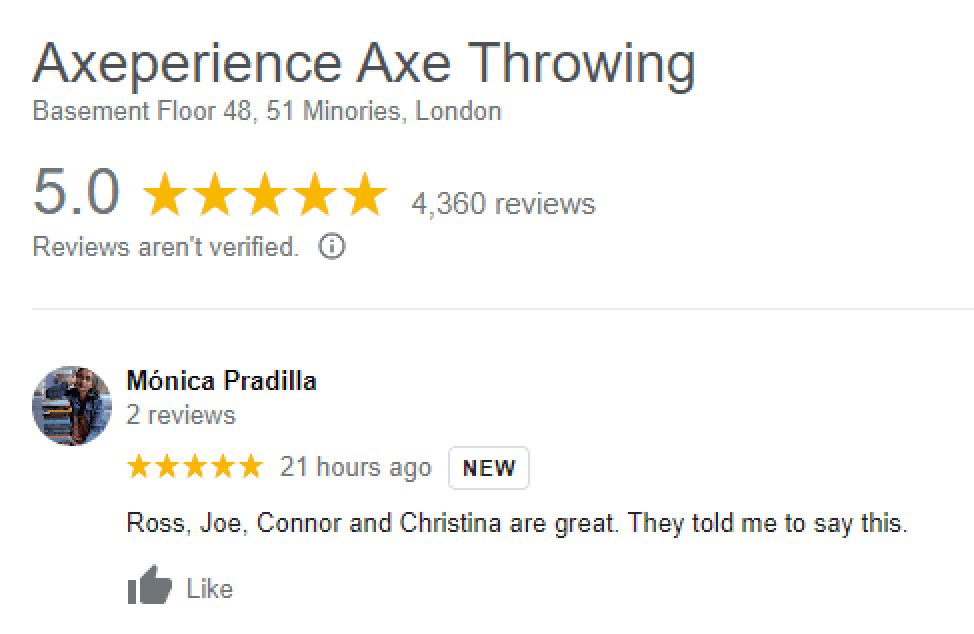
Incentivised reviews are positive reviews that individuals post for a business in exchange for some kind of benefit, rather than because they really liked the product or had a great experience.
We’ve seen incentives range from a free shot to future discounts and vouchers and this is one of the most common forms of review fakery. It can be very difficult to detect unless the reviewer has made it very obvious that they’ve been incentivised.
2. Review Gating
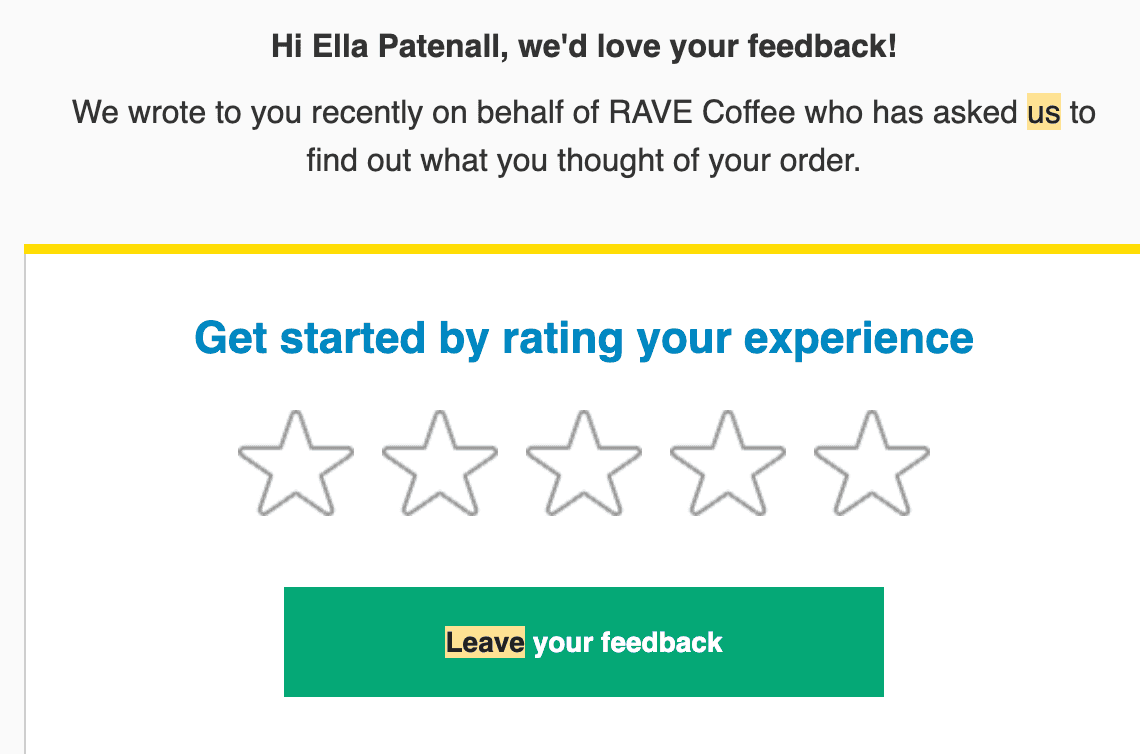
In gated reviews, businesses ask consumers via text, email, or social media about their experience. Customers who indicate that their experience was positive are then encouraged to leave a positive review, and customers who claim to have had a negative experience are asked to offer feedback privately.
The positive reviews are cherry-picked in this process, making a product appear more positive on its public-facing page and keeping any negative feedback out of sight.
3. Paid-for Reviews
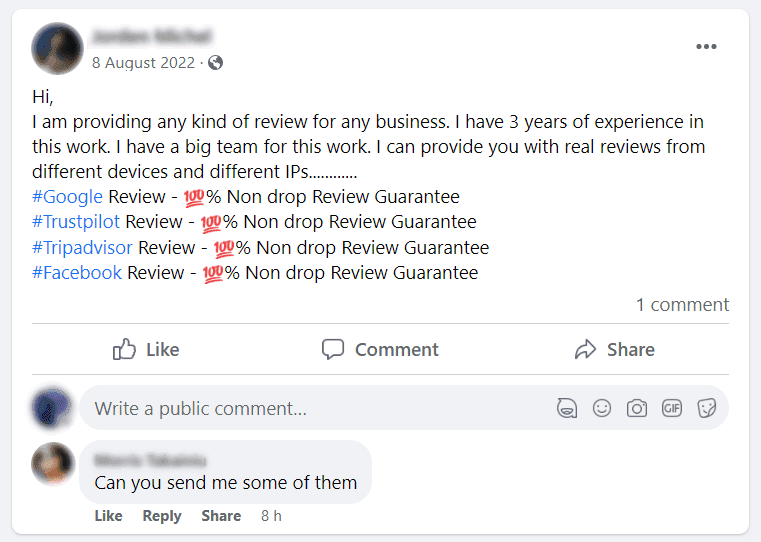
Ever seen a brand new product show up on Amazon with thousands of five-star reviews? This is likely done with the help of fake review brokers and is one of the most common fake review methods. Fake review brokers act as a middleman between unethical businesses wanting to inflate their rating and customers looking for freebies. There have been court cases involving brokers in Europe and the US.
Methods include customers purchasing goods, writing a five-star review and receiving a refund for the product in return, or simply paying a set price to receive a number of fake five-star reviews.
As well as fake review brokers, some marketing and PR agencies will offer the writing of multiple positive reviews as a service to their clients.
See our blog where we dive deeper into this issue here.
4. Family and Friends
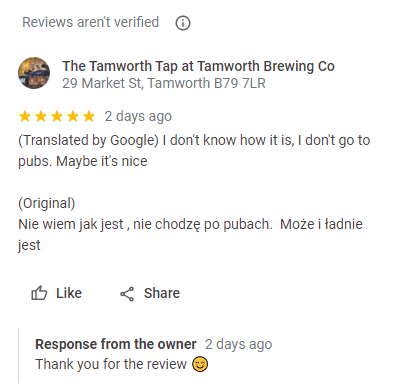
To support someone selling online, friends and family members may post positive fake reviews to help them generate more revenue. These reviews are blurred between real and fake depending on whether they even tried the product or not.
This method is mainly used by small businesses in their early stages, hoping to build a good online reputation quickly rather than waiting for organic reviews.
5. Internet Trolls/Fans
Internet users sometimes organise fake review campaigns, usually targeting someone well-known, to paint an establishment in a good or bad light.
Trolls may post negative reviews to harm a business, while superfans may flood platforms with positive reviews to support a celebrity’s product (such as a book or album).
6. Disgruntled Customers
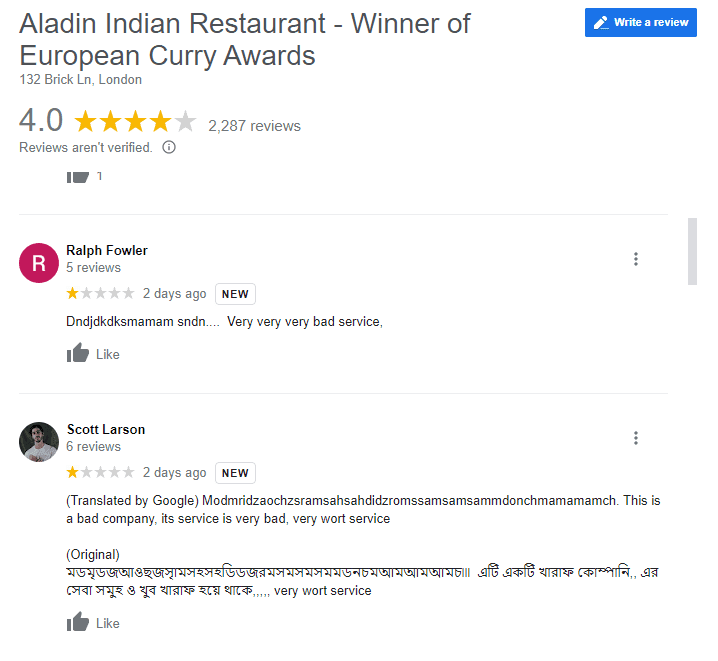
Customers who’ve had a particularly bad experience may post multiple negative reviews using different accounts.
Historically, review platforms have struggled to prevent this, meaning one individual can significantly impact a business’s reputation.
7. Review Flagging
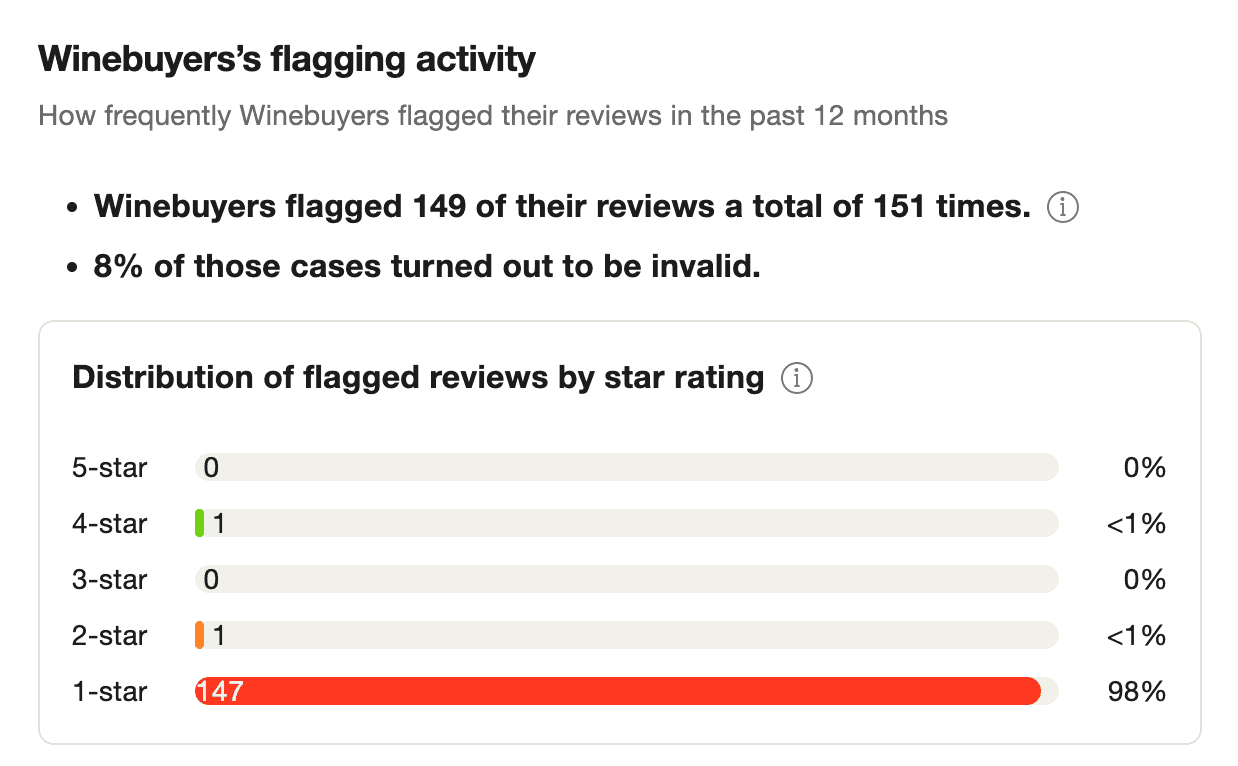
Flagging reviews is intended to remove content that violates platform guidelines, such as illegal or abusive material.
However, some businesses abuse this feature by flagging negative reviews in bulk, hoping some will be removed, artificially improving their rating.
8. Competitor Takedown Campaigns
Some businesses orchestrate wide-scale campaigns to harm the review scores of their biggest competitors. By forming a network of fake review writers who collude to post negative reviews about their competitors, businesses can materially impact their bottom line. This practice is also known as review bombing.
9. Switched Reviews
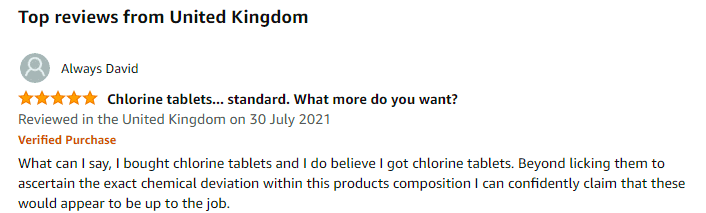
Review switching involves receiving positive reviews about a product (product A) and then swapping that product to an entirely unrelated one (product X). So, whilst the product page is now different, the positive reviews from product A remain from before. This type of review fakery is mostly found on Amazon, like in the below example where a mosquito lamp listing contained reviews about chlorine tablets.
Using Technology to Detect Fake Reviews
It is hard to tell with 100% certainty that a review is real or fake. However, our fake review detection algorithm has analysed millions of reviews (both real and fake) and has learnt what suspicious characteristics to look for in reviews that are
To find out more about how we authenticate our customers’ reviews to keep them DMCC-compliant and protect them from review bombing, backlash and fines, get in touch.
Written by Ella Patenall on February 28, 2023
Related Posts
TruthEngine® launches DMCC compliance audit as CMA steps up enforcement
Daniel Mohacek
-August 10, 2026
Up to 50% of Online Reviews May Now Be Fake in Some Sectors
Andrew Winton
-March 3, 2026
Why the TruthEngine® Exists
Daniel Mohacek
-February 18, 2026